
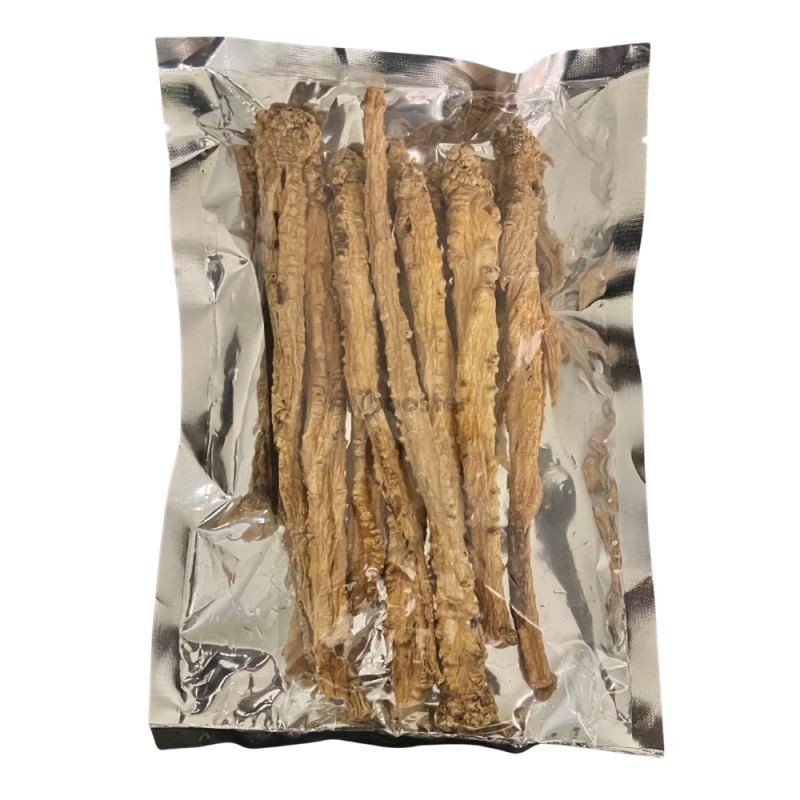
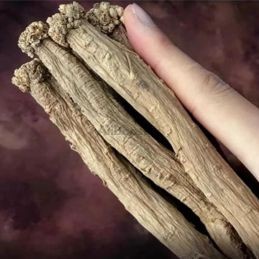
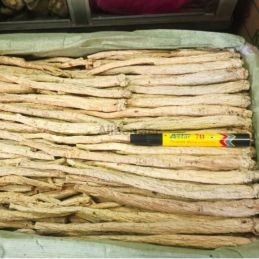

Whole roots of Codonopsis pilosula, also known as Dang Shen or poor man's ginseng, in premium format over 25 cm. Harvested in Gansu province, this traditional plant is widely used in Asian cuisine and culture, notably for soups, infusions and decoctions. Authentic, high-quality roots, faithful to Chinese traditions.
Codonopsis pilosula, also known as Dang Shen or poor man's ginseng, is a traditional plant much appreciated in Asian cuisine and culture. Originating in China's Gansu province, renowned for the quality of its roots, this product offers large (25 cm and over) dried whole roots, carefully selected for their authenticity.
Dang Shen occupies an important place in traditional Asian gastronomy and usage. It is used in broths, soups, teas and decoctions, where it adds a slightly sweet, earthy flavor. Considered a milder, more accessible substitute for ginseng, it is appreciated for its pleasant taste and its role in family preparations.
These roots come directly from Gansu, a region renowned for producing some of the finest Codonopsis pilosula. Their large size (25 cm and more) reflects their superior quality and ripeness. They are naturally dried to preserve their characteristic aroma and texture.
Dried Codonopsis can be easily incorporated into a variety of preparations:
Easy to store, dried Dang Shen is a versatile ingredient that lends itself equally well to everyday preparations and traditional festive recipes. Its mild, balanced taste makes it an ideal root for enriching your dishes while respecting Asian tradition.
Codonopsis pilosula (Dang Shen) from Gansu is an authentic, premium product, perfect for lovers of traditional Asian cuisine and those wishing to discover the ancestral flavors of China.
Specific References
Your review appreciation cannot be sent
Report comment
Report sent
Your report cannot be sent
Write your review
Review sent
Your review cannot be sent
Whole roots of Codonopsis pilosula, also known as Dang Shen or poor man's ginseng, in premium format over 25 cm. Harvested in Gansu province, this traditional plant is widely used in Asian cuisine and culture, notably for soups, infusions and decoctions. Authentic, high-quality roots, faithful to Chinese traditions.